
Capranera
Campania
Key Highlights:
- Capranera means "black goat": named for the Cilentana Nera goats that graze in the Cilento National Park—featured on the label as a symbol of the region's biodiversity.
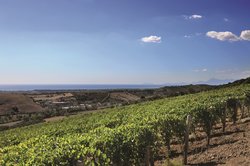
- Cilento, Campania—UNESCO-protected vineyards: grown in the Cilento National Park near Paestum, Stio, and Giungano, with mineral-rich soils and Tyrrhenian Sea influence shaping the microclimate.
- Sustainability with real constraints: no pesticides (protected natural park), natural fertilizers developed in-house, and a fully energy self-sufficient, zero-impact production and bottling model.
The Black Goat: Identity, Heritage and Native Grapes
Capranera is a Campania project built around local character—starting with its name. "Capranera" translates to black goat, a nod to the Cilentana Nera breed that grazes in the surrounding parkland and has rebounded from near extinction, mirroring Campania's rising international profile. The wines focus on time-tested regional varieties, including Falanghina and Aglianico, capturing the spirit of place without overcomplication.
The Place: Cilento National Park, Campania
The fruit comes from the heart of Cilento National Park, near Paestum, Stio, and Giungano, in southern Campania. This is a landscape defined by biodiversity and mineral-rich soils, with the nearby Tyrrhenian Sea helping moderate temperatures alongside strong sun exposure—an ideal setup for balanced, expressive wines. Cilento National Park is also a UNESCO World Heritage site, underscoring the region's protected status and distinct identity.
Sustainability and Community: Peppino Pagano's Grower-Driven Model
Ownership and intent are central to the story: Peppino Pagano recognized the need to preserve Cilento's agricultural heritage and created a model that keeps small, local growers on their land while supplying grapes for Capranera. The farming and production framework is built for long-term stewardship—no pesticides inside the protected park, in-house natural fertilizers, and a green-run, energy self-sufficient, zero-impact cellar—paired with training and integration that brings small growers into a high-standard quality program.
Owner :
Giuseppe Pagano
Varietals planted :
Falanghina, Fiano, and Aglianico
Winery production :
57,000 bottles
Winemaker :
Riccardo Cotarella
Your pdf has been sent with success.